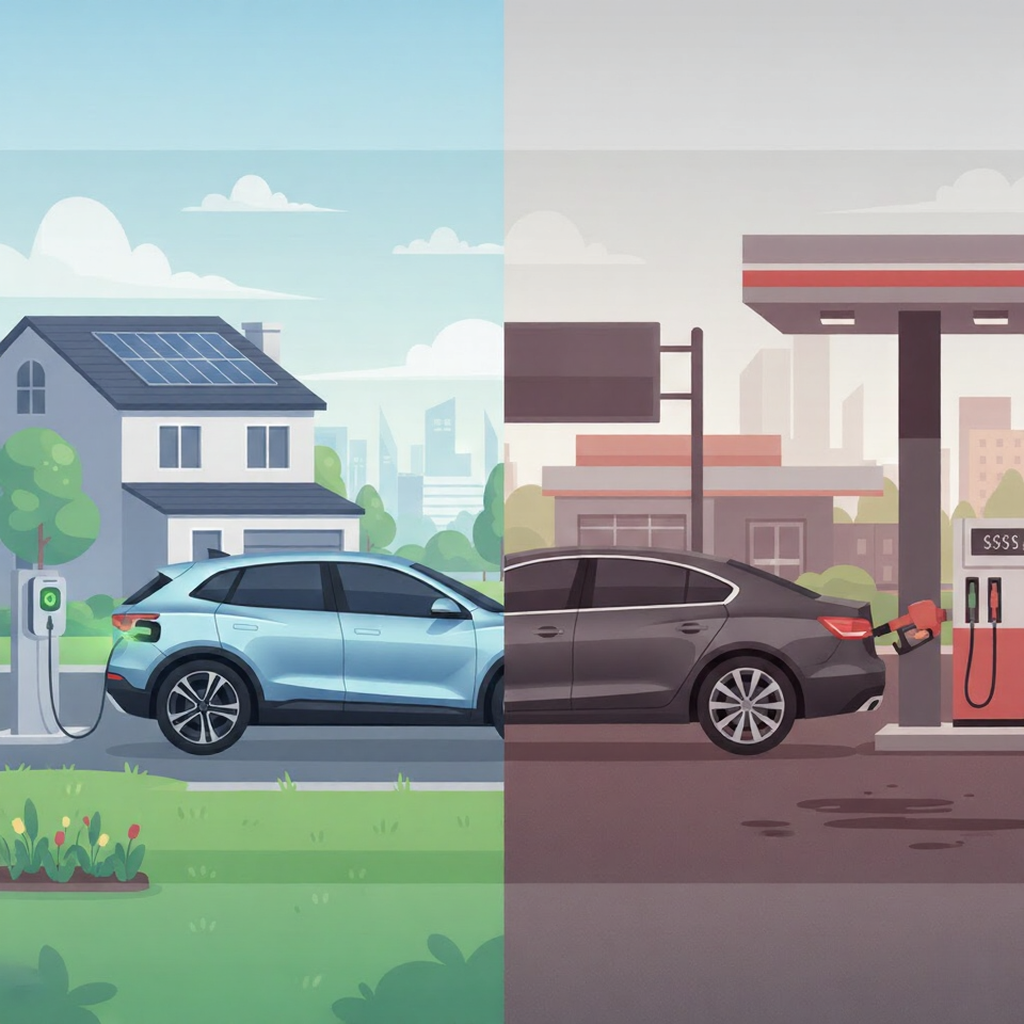
EV vs Petrol Cars
Electric vehicles (EVs) are no longer a futuristic niche. In 2026, they are more affordable, more reliable, and far more common on roads around the world. At the same time, petrol cars remain familiar, widely available, and often cheaper to buy used. For anyone planning their next vehicle purchase, the big question is simple: which option makes more sense for your budget, lifestyle, and environmental goals?
This guide compares EVs and petrol cars across the areas that matter most — emissions, running costs, charging and fueling, range, and real-world practicality — so you can make an informed decision.
Emissions: tailpipe versus total footprint. One of the biggest advantages of EVs is that they produce zero exhaust emissions while driving. There is no carbon dioxide coming out of a tailpipe, and no local air pollution from nitrogen oxides or particulate matter. This makes EVs especially attractive for cities looking to improve air quality.
Of course, electricity has to come from somewhere. In regions where power grids still rely heavily on coal or natural gas, charging an EV does create indirect emissions. Even so, most studies show that “well-to-wheel” emissions — which include electricity generation — are typically lower for EVs than for petrol cars in the majority of countries. As renewable energy continues to expand, the climate advantage of EVs is expected to grow even larger over time.
Upfront price versus day-to-day costs. EVs have traditionally cost more to buy than comparable petrol models, mainly because of their batteries. However, battery prices have been steadily falling, and government incentives or tax credits in many regions now help narrow the purchase gap.
Where EVs often shine is in running costs. Electricity is usually cheaper per kilometer than petrol, especially if you can charge at home overnight on off-peak rates. Maintenance expenses also tend to be lower. EVs have fewer moving parts, no oil changes, no exhaust systems, and less brake wear thanks to regenerative braking.
Range and charging convenience. Early electric cars were criticized for short driving ranges, but modern models in 2026 commonly offer 300 to 500 kilometers or more on a single charge, with some premium vehicles going even further. For daily commuting and errands, this is more than enough for most drivers.
Home charging is one of the biggest lifestyle advantages of owning an EV. Plugging in overnight means you start each day with a full “tank,” without visiting a fuel station. Public charging networks are also expanding rapidly, with fast chargers along highways and in urban centers making long-distance travel increasingly practical. Planning road trips does require some adjustment, but charging apps and built-in navigation systems now make it much easier to find available stations.
When petrol cars may still make sense. Despite the benefits of EVs, petrol vehicles are not obsolete. If you drive only occasionally, live in an apartment without access to charging, or are shopping for a very low-cost used car, a small and efficient petrol model can still be a reasonable choice.
In some rural areas, charging infrastructure remains limited, which can make ownership more challenging. Drivers who regularly take extremely long trips in regions with sparse charging stations might also prefer the speed and familiarity of refueling with petrol.
Total cost of ownership matters most. Rather than focusing only on the sticker price, it is helpful to look at the total cost of owning a vehicle over several years. This includes fuel or electricity, maintenance, insurance, and resale value. In many cases, EVs are already competitive — and sometimes cheaper — than petrol cars over the life of the vehicle, especially as fuel prices fluctuate.
Final thoughts. For most people buying a new car in 2026, an electric vehicle is well worth serious consideration. Lower running costs, improving charging networks, and reduced emissions make EVs an increasingly attractive option. Petrol cars still have a place in certain situations, but their long-term advantages are shrinking as technology and infrastructure evolve.
Whichever option you choose, driving efficiently, maintaining your vehicle properly, and combining trips when possible will help lower costs and reduce environmental impact. The transition to cleaner transportation is already underway, and informed consumers are at the center of that change.